
VALVE BAG FILLERS
Valve bag filling machines are designed to package powdered and granular materials quickly, accurately, and with minimal dust. These systems are commonly used for cement, minerals, fertilizer, chemicals, resins, flour, sugar, starch, feed products, wood products, and other dry bulk materials. Valve bag fillers can handle bag weights from 20 lb to 110 lb and support both low- and high-volume production environments. ECC valve bag filling equipment is available in manual, semi-automatic, and fully automated configurations, while the sealed filling process helps reduce product waste, control dust emissions, and improve overall packaging efficiency.
Valve Bag Filling Machines For Sale
206 Auger Bagger
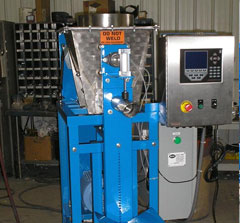
This valve bag filling machine is designed to efficiently package finely ground sanitary-grade powders into valve bags. Ideal for applications requiring frequent washdowns and thorough cleaning between production runs.
Examples of commonly bagged materials:
flour, bakery mixes, cocoa, spices, pepper, nutraceuticals, pigments, chemicals, and animal feed additives
Fills up to 10 bags per minute
770 Force Flow Air Bagger
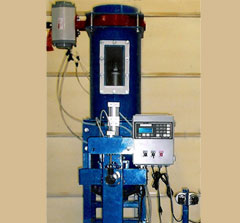
Built for dependable, accurate bag filling, this system efficiently handles a wide range of powders, granules, pellets, and blended materials with clean, consistent performance.
Examples of commonly bagged materials:
mortars, hydrated lime, gypsum, bentonite, barite, pigments, fertilizer, plastic pellets, plastic resins, calcium carbonate, starch, corn flour, oat flour, powdered sugar, and hard grains
Fills up to 5 bags per minute
8020 Impeller Bagger
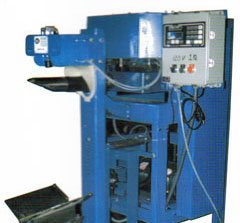
This vertical rotary vane valve bag filler is designed to efficiently package industrial-grade powders and powder-to-granule blends with clean, accurate performance across demanding production environments.
Examples of commonly bagged materials:
Portland cement, masonry cement, fly ash, calcium carbonate, plaster, mortars, bentonite, and gypsum
Fills up to 8 bags per minute
202E Gravity Bagger
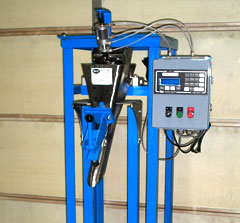
The 202E Gravity Bagger is built for accurate, efficient filling of free-flowing granular materials. Its gravity-fed design delivers consistent bag weights and dependable performance in industrial bagging operations.
Examples of commonly bagged materials:
seed, feed pellets, grain, fertilizer, plastic pellets, salt, beans, rice, corn, coffee beans, and other free-flowing granular products
Fills up to 5 bags per minute
Request a Quote!
What Are Valve Bag Fillers and How Do They Work?
Valve bag filling machines use pre-formed bags designed with a valve opening that allows fast, efficient filling through a sealed spout connection. Once filled, the bag’s internal valve helps close the opening without the need for secondary sealing. Due to their speed, clean filling process, and versatility, valve bags remain one of the most widely used industrial packaging styles worldwide.
Valve bags are available in multiple configurations to support different production requirements, including tuck-in, heat seal, sonic seal, poly-lined, and moisture-resistant designs. ECC valve bag filling machines are capable of packaging flaked, powdered, and granular materials in 20–110 lb. (9–50 kg) bags at production rates reaching up to 24 bags per minute.
Applications & Common Names for Valve Bag Fillers
Valve bag filling machines are commonly used to package a wide variety of dry bulk materials, including cement, concrete products, minerals, fertilizer, resins, chemicals, flour, starch, feed, salt, sugar, and wood products. Their ability to efficiently handle powdered and granular materials makes them ideal for many industrial bagging applications.
Valve bag fillers are also commonly referred to as valve bag packers, valve bag packing machines, or air packers depending on the material, filling method, and industry application.
Common Materials Packaged With Valve Bag Fillers:
Building Materials
Cement, Concrete, Stucco, Grout, Plaster, Sand, Refractories
Food Products
Flour, Sugar, Salt, Cake Mixes, Cocoa, Spices, Bakery Mixes
Industrial Minerals
Graphite, Garnet, Barite, Bentonite, Gypsum, Silica Sand
Agricultural Products
Feed, Seed, Fertilizers, Wood Pellets, Distillers Grains, Lime
Chemicals
Plastic Pellets, Fertilizer, Hydrated Lime, Zinc Oxide, TIO2, Iron Oxide
Air Packer Valve Bag Fillers:
Air packer valve bag fillers, also known as pneumatic or forced-flow packers, are designed for filling free-flowing, low-moisture powders, flakes, and fine granular materials. These systems are commonly used for products that require gentle handling during the bagging process.
Applications:
- Mortars
- Sugar
- Calcium carbonate
- PVC pellets
- Limestone
Impeller Packer Valve Bag Fillers:
Impeller packer valve bag fillers, sometimes referred to as turbine packers, are designed for packaging dry, fine, high-density powders. These systems are commonly used for materials 200 mesh or finer where maintaining product consistency and flow characteristics is important.
Applications:
- Fly ash
- Carbon black
- Portland cement
- Masonry cement
- Kaolin
- Clay
- Graphite
- Silica
- Activated carbon
Auger Packer Valve Bag Fillers:
Auger valve bag fillers, often called screw baggers, are designed to package flakes, powders, pellets, granules, and fibrous materials with accurate, controlled filling performance across a wide range of industrial applications.
Applications:
- Cellulose
- Fiber
- Compost
- Flour
- Insulation
- Limestone
- Minerals
- Pepper
- Pigments
- Plastic pellets
- Resins
- Crumbled rubber
- Salt
- Sand
- Sawdust
- Bakery mixes
We Can Help You Select the Right Valve Bag Filling Machine
Choosing the right valve bag filling machine for your operation can be a complex process. The bagging equipment specialists at ECC work closely with customers to recommend the best solution based on material characteristics, production goals, and application requirements.